



AML Check
The security of financial transactions remains the highest priority of our cryptocurrency service. We have developed a convenient tool for preliminary wallet address verification in accordance with strict international AML standards. You can instantly assess transaction history and identify potential risks before transferring funds. This ensures reliable protection of your digital assets from interaction with any suspicious sources.
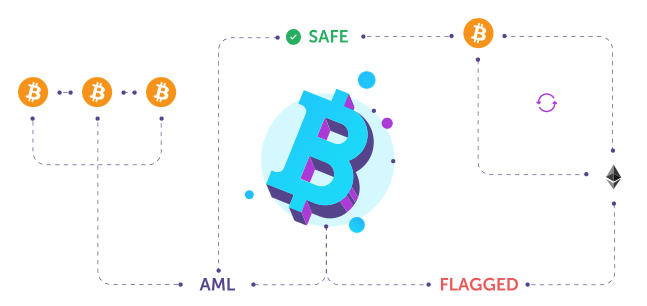
Verification procedure:
Enter details
Enter the wallet address in the corresponding field. If needed, you can also provide the transaction TXID. Supported: BTC, ETH, LTC, USDT (TRC20/ERC20).
Start analysis
Click the 'Check' button, and the system will automatically scan the address history in AML databases.
Review the report
You will receive a risk assessment (minimal/moderate/critical) and a brief explanation of the result.
AML check results are for informational purposes only and are based on open blockchain data and international compliance registries. They do not constitute legal advice and do not replace professional legal expertise. However, the analysis helps identify potential risks in advance. We recommend checking the counterparty's address before any transaction — this reduces the likelihood of financial losses and confirms the legitimacy of assets.
Asset legality verification levels:
Minimal risk
The address has no links to suspicious activity. The funds are considered safe for exchange.
Moderate risk
Indirect links to sources of unknown origin have been detected. Additional verification is recommended.
Critical Risk
The address or transaction is associated with illegal activity or sanction lists. Usage is not recommended.
Advantages

Intuitive Interface
Simple checks and clear reports without complex terminology.

Flexible Pricing
Transparent pricing and affordable cost for each subsequent check.

Support for Popular Blockchains
Works with BTC, ETH, LTC, USDT (TRC20/ERC20), and other top assets.

First Check Free
Simple checks and clear reports without complex terminology.
Sources of Risk
Wallets included in OFAC, EU, UN, and other regulatory lists.
Addresses associated with illegal marketplaces on the Tor network.
Services to obscure the origin of funds (ChipMixer, Blender.io, and similar).
Addresses associated with exchange hacks, phishing, or private key thefts.
Wallets used to receive ransoms during cyberattacks.
Addresses involved in scams, pyramid schemes, or fake investment projects.